
Good research starts with good material.
Here's the honest version of how this works — what's in the vial, who checks it, and why any of it matters. No white coats required.
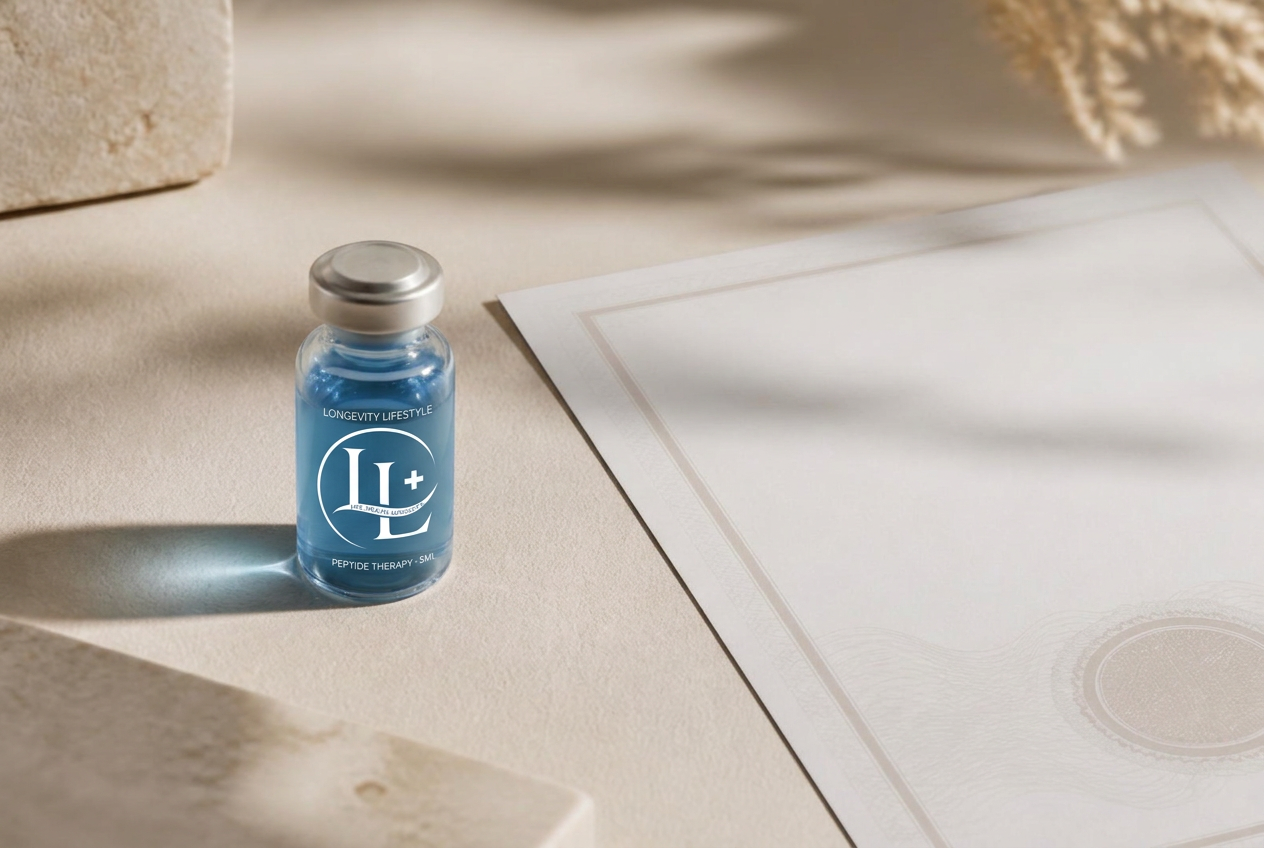
Every batch goes to an independent, ISO-accredited lab. Identity and purity, verified by someone who doesn't work for us. The certificate ships with your order.
Solid-phase synthesis in a controlled environment, checked by HPLC and confirmed by mass spec. Translation: the machines agree on what's in the vial.
We can trace every lot back to its raw material. If we can't tell you where something came from, we don't sell it. Simple rule.
Someone actually checks every batch.
Not a spreadsheet, not a supplier's word — an independent lab with accreditation on the line. If a lot doesn't clear identity and purity, it never gets a listing. That's the whole policy.

From order to doorstep
Four checkpoints stand between a raw synthesis batch and a vial with your name on it.
We qualify the manufacturer before the first order — facility documentation, synthesis method, and a sample lot we test ourselves.
Each incoming lot goes to an ISO-accredited lab for HPLC purity and mass-spec identity. We don't test our own material and grade our own homework.
Lyophilized vials are stored cold and shipped with insulation. Every lot number stays tied to its certificate through the whole chain.
Your order ships with the COA for the exact batch in the box, plus reconstitution and storage notes in plain language.
The words on the paperwork, decoded
Freeze-dried into a stable powder. It's why the vial looks empty — the material is a thin film at the bottom.
Adding bacteriostatic water to bring a lyophilized peptide back into solution before use in research.
High-performance liquid chromatography. Separates the sample into its parts to produce the purity percentage.
Weighs the molecule to confirm its identity matches the sequence on the label.
The unique ID for one production run. It's how a specific vial maps to a specific certificate.
Certificate of Analysis — the independent lab's signed report for that lot's identity and purity.
Questions we get a lot
A short chain of amino acids — basically a very small protein. Your body already makes thousands of them to send signals between cells. Research peptides are lab-made versions of those signals.
Because a study is only as good as the material behind it. If a vial is 82% of what the label says, everything you observe afterward is guesswork.
Certificate of Analysis — the lab's report card for that specific batch. We include it with every order, and yes, you're encouraged to read the squiggly graphs.
Different goals point to completely different research. Two minutes of questions saves you from scrolling a catalog that mostly isn't for you.
Lyophilized (powdered) peptides are stable at room temperature for shipping, but belong in a freezer long-term. Once reconstituted, refrigerate and use within the window on the batch sheet.
It means more predictable. Purity tells you how much of the vial is the target compound; it says nothing about what the compound does. Both matter, and they're separate questions.
HPLC separates what's in the sample and measures how much of each part there is — that's your purity number. Mass spec weighs the molecule to confirm it's the right one — that's identity.
No. Everything on this site is sold for laboratory research use only. We don't make medical claims and we don't provide dosing guidance, because that isn't ours to give.
Still have questions?
Take the free intake and we'll match you with research that fits what you're actually looking into.